Yes, if anyone was hurt, or if the damage crosses one of DMV's $2,500 lines. In those cases each driver must send DMV an Oregon Traffic Collision and Insurance Report within 72 hours of the crash. The duty is yours personally. It does not go away because an officer came to the scene, and it does not depend on who caused the collision.
The four triggers, as a quick test
Run through these questions in order. One "yes" is enough.
- 1Was anyone injured, or did anyone die? File.
- 2Will the repairs to your own car cost more than $2,500? File.
- 3Did any vehicle in the crash take more than $2,500 of damage, and was any vehicle towed away from the scene? File.
- 4Was there more than $2,500 of damage to something that is not a vehicle, like a fence, a mailbox, a power pole or a storefront? File.
If every answer is no, Oregon does not require the DMV report. You may still want one on record for your own insurance file, but that is a choice.
These four tests come straight from the Oregon DMV accident reporting page, which is worth bookmarking because DMV updates its forms and instructions there.
Why $2,500 is easier to hit than it looks
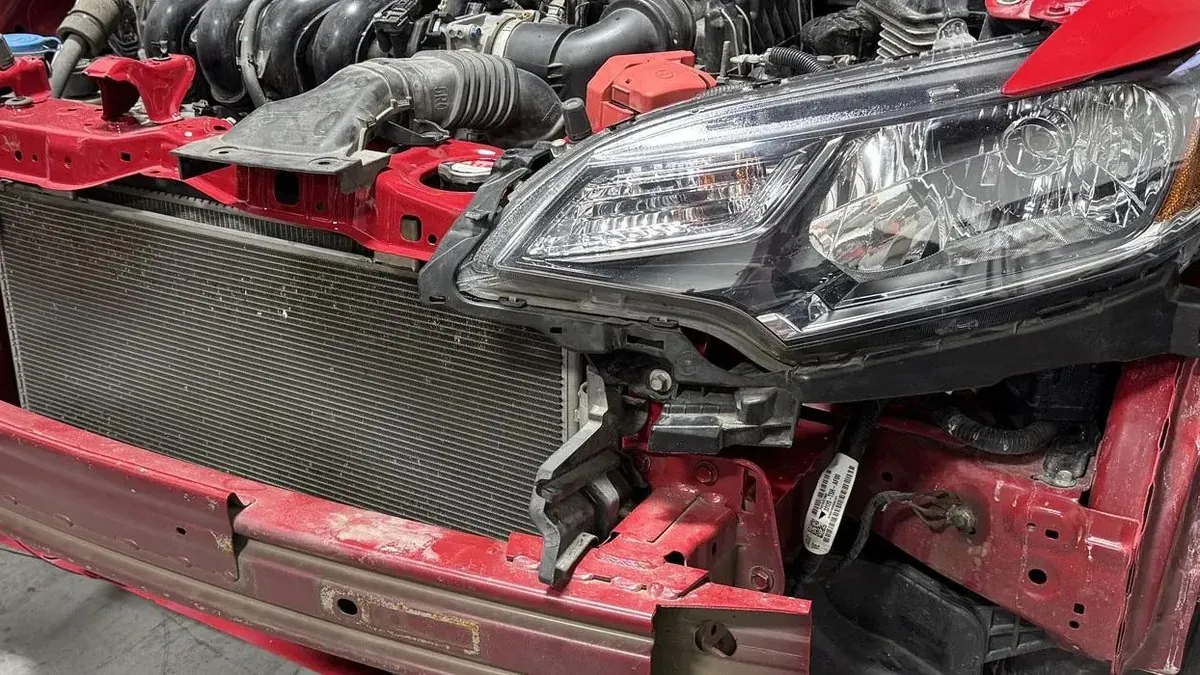
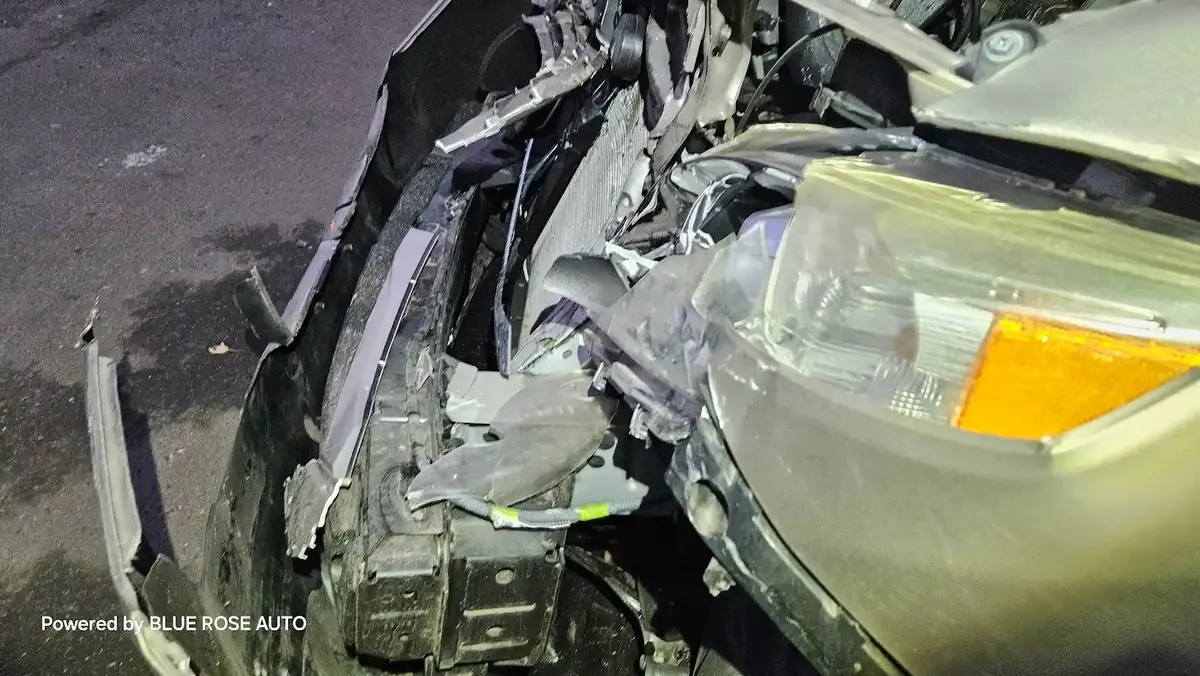
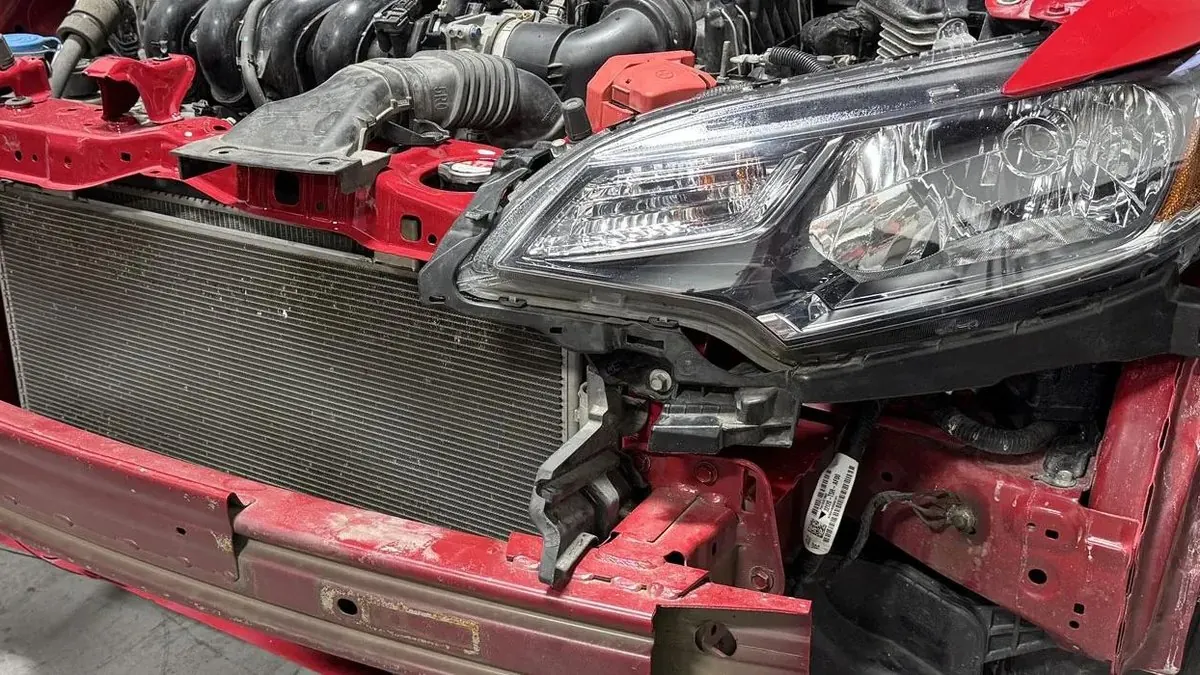
Most drivers judge damage by what they can see. A shop judges it by what is behind the panel. Modern bumpers are a plastic cover over foam absorbers, a steel or aluminum reinforcement bar, brackets, and often parking sensors or a radar unit. The cover can pop back out while the bar behind it is folded.
Some parts that quietly push a small-looking repair past the threshold:
- a cracked headlamp housing or a broken mounting tab,
- parking sensors and their brackets in the bumper,
- the radar or camera used by automatic emergency braking,
- paint blended into the panels on either side so the color matches,
- a bent bumper reinforcement, like the one in the photo above.
You usually will not have a repair estimate within 72 hours. When the car took a solid hit and you are unsure, filing is the safer call. A report that turns out to be unnecessary costs you twenty minutes. A missing one can cost you your license.
How to file
DMV recommends the online report. To use it you need an Oregon driver license, instruction permit or ID card number. Drivers without one, including many visitors, use the paper form and can mail it, fax it or hand it in at a DMV office.
Have these ready before you sit down to fill it in:
| Gather this | Where it usually comes from |
|---|---|
| date, time and exact location | your phone's photos carry the time stamp |
| other driver's name, license and plate | the details you swapped at the scene |
| both insurance companies and policy numbers | insurance cards, yours and theirs |
| a short description of what happened | written the same day, while you remember |
| a rough damage figure | a shop estimate if you have one, your best judgment if not |
| injuries, if any | who was hurt and whether they were treated |
Write the description plainly. Direction of travel, lane, speed if you know it, what each car did. Skip opinions about blame. Your insurer will read the facts and decide that part.
Missed the 72 hours?
File anyway, as soon as you can. DMV's own guidance says a late report should be submitted as soon as possible, and late is far better than never, because failing to file can lead to a suspension notice. If you were in hospital or the car was impounded, note that in the description so the delay makes sense to anyone reading it later.
Police report, DMV report and insurance claim are three separate things
People mix these up all the time.
- The police report is written by officers if they respond. Not every fender-bender gets an officer, so there may be none at all.
- The DMV report is the one you write and send. It is required under the rules above whether or not police wrote anything.
- The insurance claim is your conversation with the insurer. It runs on its own clock, and the DMV report does not open a claim for you.
Keep a copy or a screenshot of the DMV submission with your claim file. Adjusters ask for it, and it saves digging later. The insurance claim steps page covers what happens once you make that call, and the crash-to-repair overview shows where the report fits in the full sequence.
Getting the damage looked at
A written estimate from a body shop settles the $2,500 question for good and gives your insurer something concrete. In Springfield, Blue Rose Auto handles auto body and collision repair; the business started in 1994 as a detail shop in Junction City. If you want to understand what a collision repair covers before you book an estimate, Blue Rose Auto explains its auto body and collision services and how to reach the shop on Olympic Street.
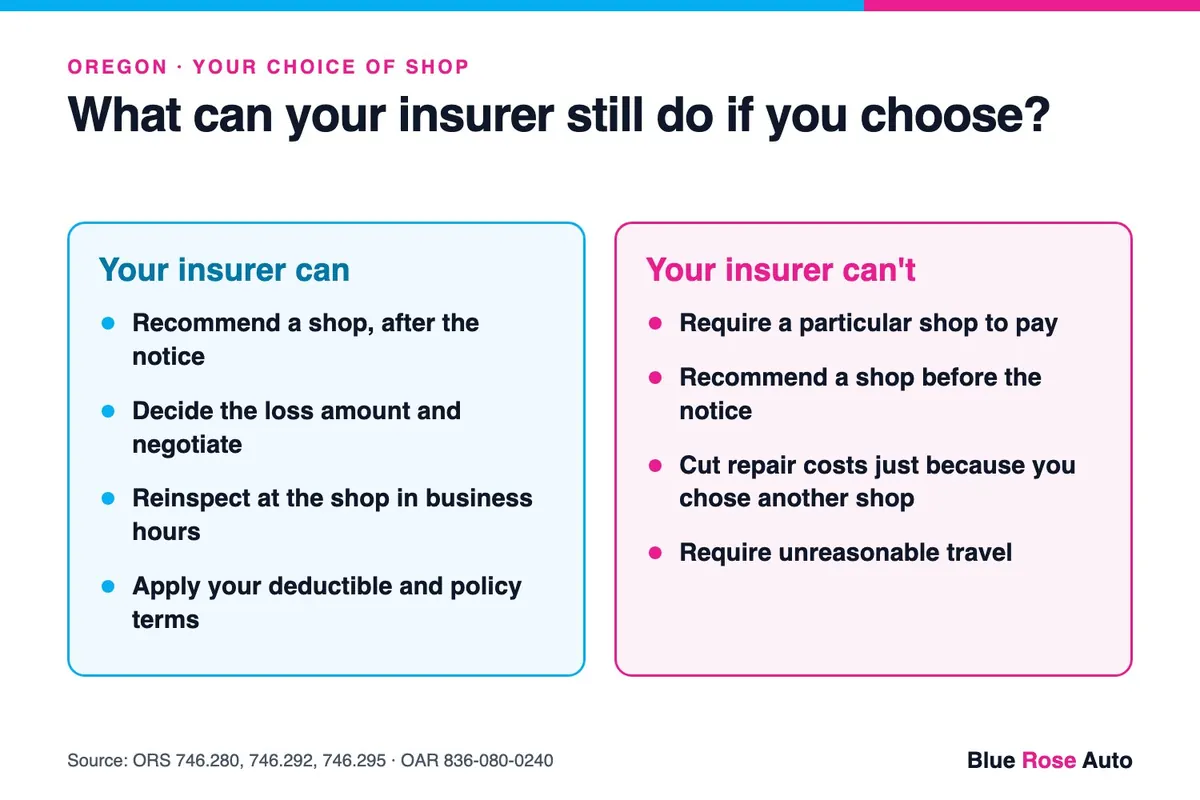
Once you have an estimate in hand, the next decision is where the work gets done. Oregon law lets you make that call, and the guide on choosing a body shop walks through what to compare. Blue Rose Auto is open weekdays 8 to 5 and Saturdays 10 to 5, at (541) 641-8877.