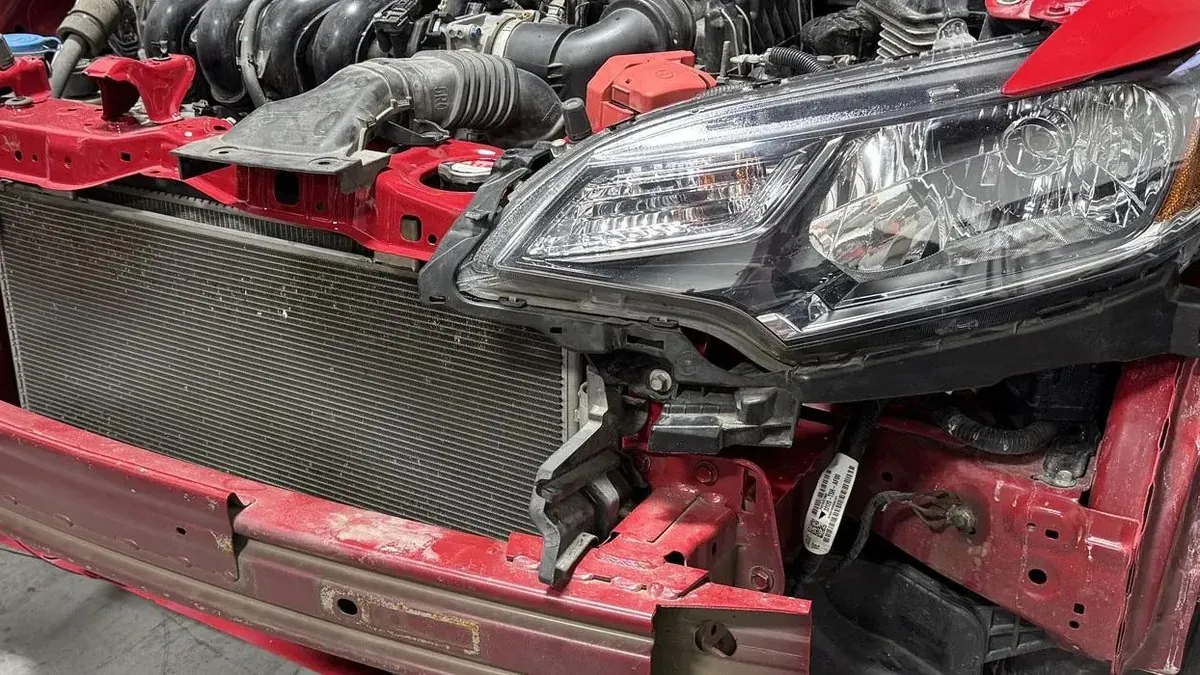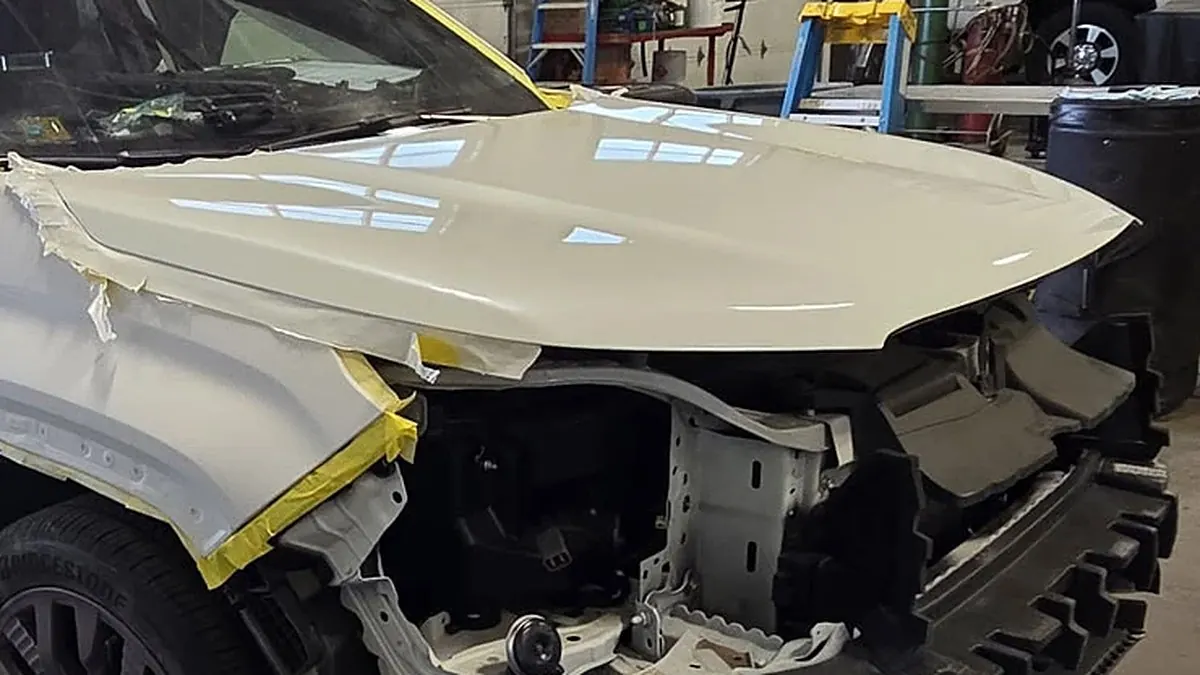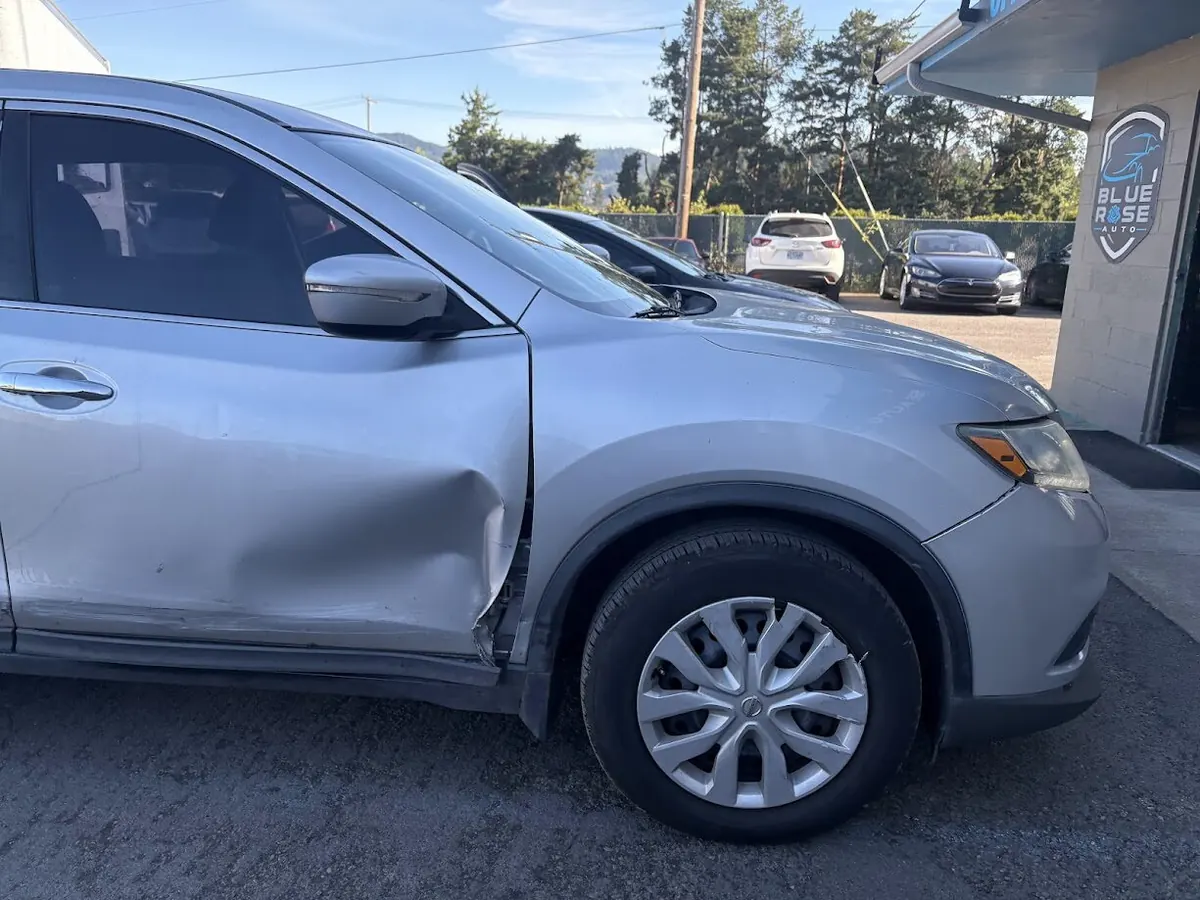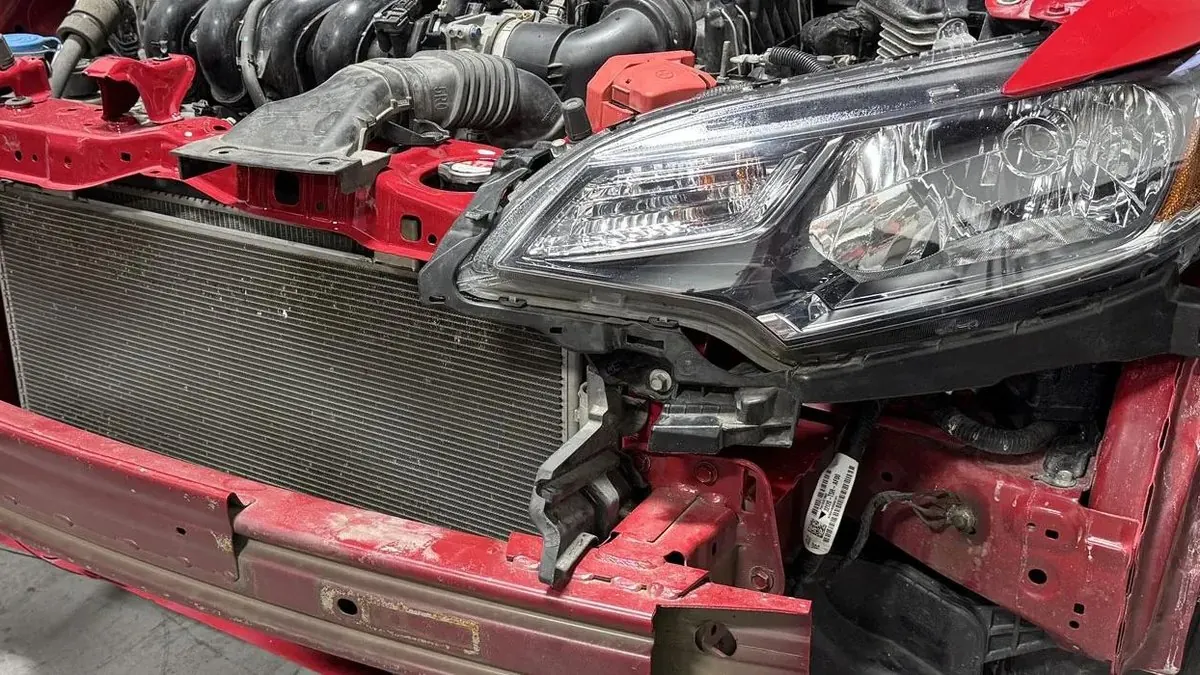
EV collision repair follows the same basic path as any body repair, with three additions: the high-voltage system has to be checked and handled safely, the body often uses aluminum or mixed metals that need their own methods, and the driver-assist sensors have to work correctly when the car leaves. Choose a shop that can explain how it handles all three for your model.
First, at the scene and on the tow truck
Electric cars are built to protect occupants and responders after a crash. The U.S. Department of Energy's Alternative Fuels Data Center notes that EV battery packs sit in sealed shells, high-voltage lines are insulated, and light-duty vehicles must have safety features that deactivate or isolate the electrical system when they detect a collision or short circuit.
That does not mean you should poke around. A few practical points:
- If you see smoke, hear hissing or popping from under the car, or smell something sharp and chemical, move well away and call 911.
- Tell the tow company it is an electric car before the truck arrives.
- Check the owner's manual for the maker's towing and transport instructions, and show them to the driver.
- Do not try to charge a car that took a hard hit underneath until it has been inspected.
The three things that change in the repair
| Area | What is different on an EV | What to ask the shop |
|---|---|---|
| High-voltage battery | the pack is a large, heavy part of the floor structure | how do you check the pack and its mounts after an underbody hit? |
| Body materials | many EVs use aluminum or a mix of steel and aluminum | do you follow the maker's repair procedures for these joints? |
| Sensors and cameras | driver-assist hardware sits in bumpers, mirrors and grilles | how do you confirm the sensors aim correctly after the repair? |
The battery and high-voltage system
Before heavy body work, an EV's high-voltage system is usually made safe following the carmaker's steps. Underbody damage is the case to take seriously. A hit from a curb, a rock or debris can dent the pack housing even when the car still drives. Tell the shop and the insurer about any hard underbody strike, even if nothing looks wrong.
Aluminum and mixed metals
Aluminum saves weight, and it is common on electric cars because batteries are heavy. It does not respond to straightening the way steel does, and the joining methods differ from model to model. Your best protection is a shop that works from the manufacturer's own repair procedures and can tell you which ones it followed on your car.
Sensors, cameras and calibration
Automatic emergency braking, blind spot warning and lane keeping all depend on sensors. The Insurance Institute for Highway Safety explains in its overview of crash avoidance technology that these systems use cameras, radar or lidar to watch the road. Those sensors live in exactly the places that get hit: bumpers, grilles and mirrors.
A sensor that is even slightly off its intended aim can still switch on without any warning light. That is why many repairs that move or replace these parts end with a calibration check. Ask for the result in writing.
Teslas specifically
Tesla has its own approved body shop program for collision work. On a car where the battery forms part of the floor, it makes sense to ask any shop whether it belongs to that program before the car goes in.
Some Tesla-specific habits help any repair go smoothly:
- Save any dashcam clips from the car's USB drive before the car goes to the shop.
- Photograph any alert messages on the center screen after the crash.
- Note the software version if you can, in case the shop needs it.
- Keep your phone key working, and ask how the shop wants to handle key cards while the car is with them.
Claims and parts for electric cars
Parts for EVs can take longer to arrive, and battery-related inspection adds time. Build that into your rental planning. The insurance claim steps page explains how supplements and rentals work, and choosing a body shop covers your right in Oregon to pick a shop with EV experience instead of a default network shop. When underbody damage is serious, the numbers can tip toward a total loss, so read that page before agreeing to anything.
Tesla collision work in Springfield
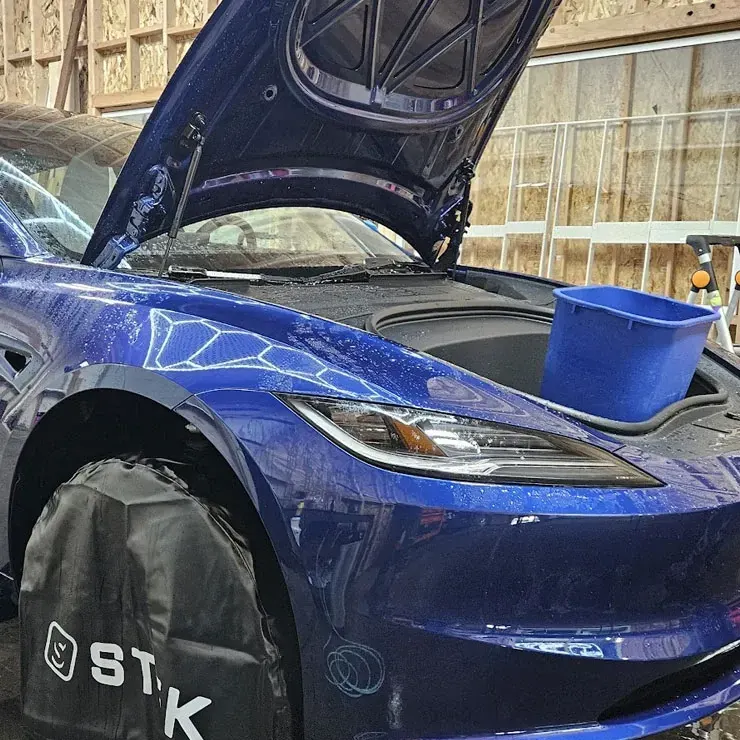
Blue Rose Auto is a Tesla Approved Body Shop in Springfield, Oregon, covering structural and cosmetic collision repair, and the photo above was taken inside the shop. Owners in Eugene, Springfield and the rest of Lane County can see what the shop does for their cars on the Blue Rose Auto Tesla repair page, which is the place to start before booking an estimate. Blue Rose Auto also handles collision repair on other electric and gas vehicles, and the crash-to-repair guide covers the steps that come before the shop.